Food Theory Blog #1

For my blog post I choose beef. The cut I choose was ground shoulder or chuck. I choose this selection because you can create many recipes using ground meat and this to me is the best cut of meat to eat ground.

Beef is the third most consumed meat in the world (Raloff, 2003). Humans have been consuming beef since prehistoric times and the animal can be used for meat, dairy and leather. The chuck comes from the forequarter of the animal and consists of the neck, shoulder blade, and upper arm (Alfaro, 2019). This cut of meat contains lots of connective tissue as its apart of the animal that is constantly working. This makes meat from this area ideal for braising and other slow cooking methods. Due to the high fat content of chuck it is also ideal for making ground beef that can be used for making burgers and meatballs among other ground beef dishes.
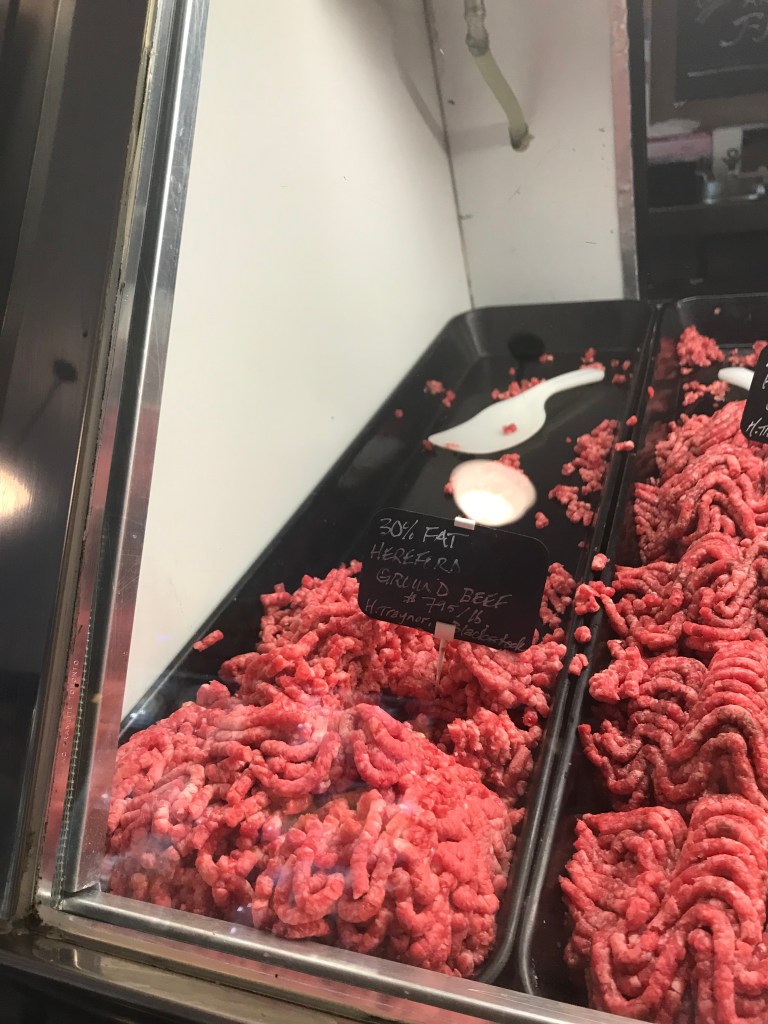
30% Fat ground chuck. As seen at Butchers of Distinction.

The price of the ground chuck that I purchased was $7.95/lb. I believe the way to achieve optimal return on ground beef would be to make a bolognese and serve it with pasta. Or to make a dish like shepherds pie where the meat can be stretched more and seem more filling when eaten with mashed potatoes and veg.

Other cooking methods that be used with this product are to make burgers or meatloaf. These are ideal ways to use the meat because of its high fat content it helps to create a very juicy delicious product.

 Ground Chuck Burger on Olive Sourdough  
 
 24 oz Ground Chuck
 Olive Sourdough
 1 Bunch Arugula 
 4 slices of Gruyere Cheese
 1 tbsp Canola oil
 Mayonnaise
 Ketchup  

- Form the ground meat into 4 equal 6oz balls. Work the meat in your hand making sure the ball is formed well and there are no loose pieces
- Turn the ball of meat in the palm of your hand well forming into a puck shape with your other hand. Season liberally with salt and pepper on both sides and reserve.
- Wash arugula and reserve
- In a pan heat the oil on high heat
- Once the oil is hot drop the patties and cook for 2 1/2 - 3 minutes on both sides.  Place the cheese on the patties and finish in the oven for 5-7 minutes at 350 Degrees
- Serve on toasted Sourdough with equal parts Mayo and ketchup and arugula.  

Image result for ground chuck burger

References

Alfaro, D. (2019, May 5). Where’s the Beef? Chew on These Top Beef Cuts. Retrieved from https://www.thespruceeats.com/cuts-of-beef-chuck-loin-rib-brisket-and-more-995304

https://www.debragga.com/dry-aged-burger-from-debragga.html

Piatti-Farnell, Lorna (2013). Beef: A Global History. London: Reaktion Books. p. 7. ISBN978-1780231174

Raloff, Janet (31 May 2003). Food for Thought: Global Food TrendsScience News.

Oh Hello…

My name is Ari Tissenbaum and I am a first year Culinary Management student at George Brown. A topic in nutrition that interests me are fad diets. Recently I have been learning about Keto diets and the problems associated with it. I would like to learn more about these kind of diets while going through this course.

Nutrition is definitely a focus in the culinary world today. As consumers become more and more aware of what they are purchasing and consuming, nutrition becomes more of a focal point of these decisions. If consumers are becoming more aware that means the trends in restaurants are changing with them and rightly so. So yes nutrition does and will play an important role in the industry because that is the demand of the consumer.

I choose https://food-guide.canada.ca/en/ as my reliable nutrition website. I believe this website to be reliable because it was created by using scientific research and not basing off of opinion or influence. Also the website does not advertise any products and only provides information and fact based advice. Lastly this website comes from the Government of Canada and despite my best judgment I choose to believe the information they provide. I believe that the utmost time and research went into creating the website and guide and the information provided is factual.

For my unreliable website I choose https://www.naturalnews.com/. To me this site is unreliable from the jump. All you have to do is read its front page. The articles being displayed all contain extremely click bait titles that don’t contain any reliable health information. All the articles and blogs on the website are all opinion based. None of the information provided is backed by scientific research. The website is also covered in ads promoting the best anti-oxidant formulas and other detox formulas. This screams red flags to me. These kind of products use buzzy words to promote useless products and if a website stands behind and promotes these products I can deem them to be unreliable.

Pink Pickled Turnips

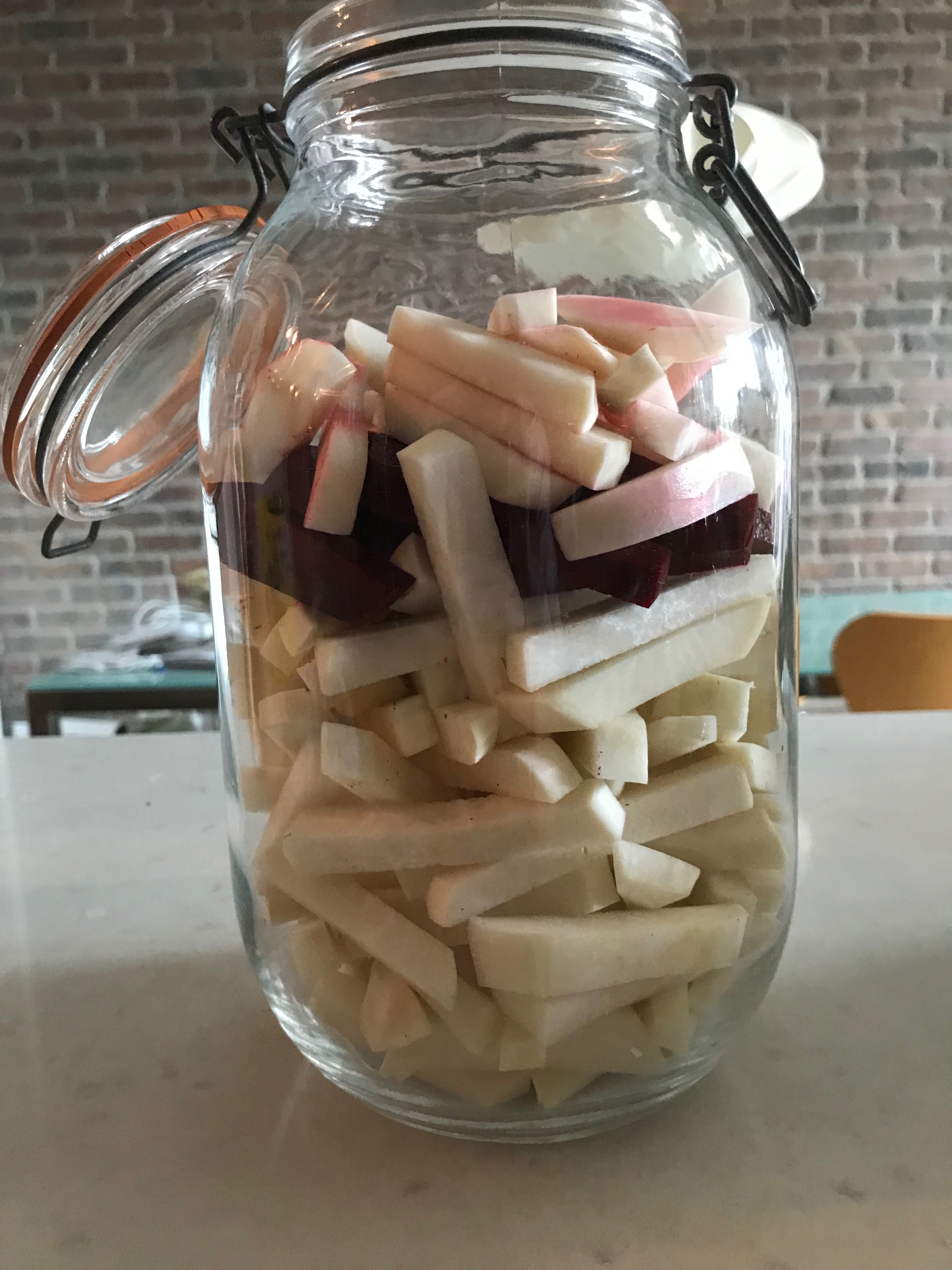
For this week’s blog I choose to use turnips as my raw ingredient. I planned to pickle them in a middle eastern style. You would recognize these pickles at any shawarma restaurant around the world. To make these pickled turnips I used a standard pickling recipe and let them ferment for a few days. The recipe is as follows:

  • 3 Cups Water
  • 1 Cup White Vinegar
  • 2 Bay Leaves
  • 1/2 Cup Kosher Salt
  • 2ish lbs Turnips
  • 1 Medium Beet
  • 2 Cloves Garlic
  1. Dissolve the salt in the water in a small pot with the bay leaves. Once dissolved set aside.
  2. Cut the turnips and beet into 2 inch batonnet’s.
  3. Crush the garlic cloves.
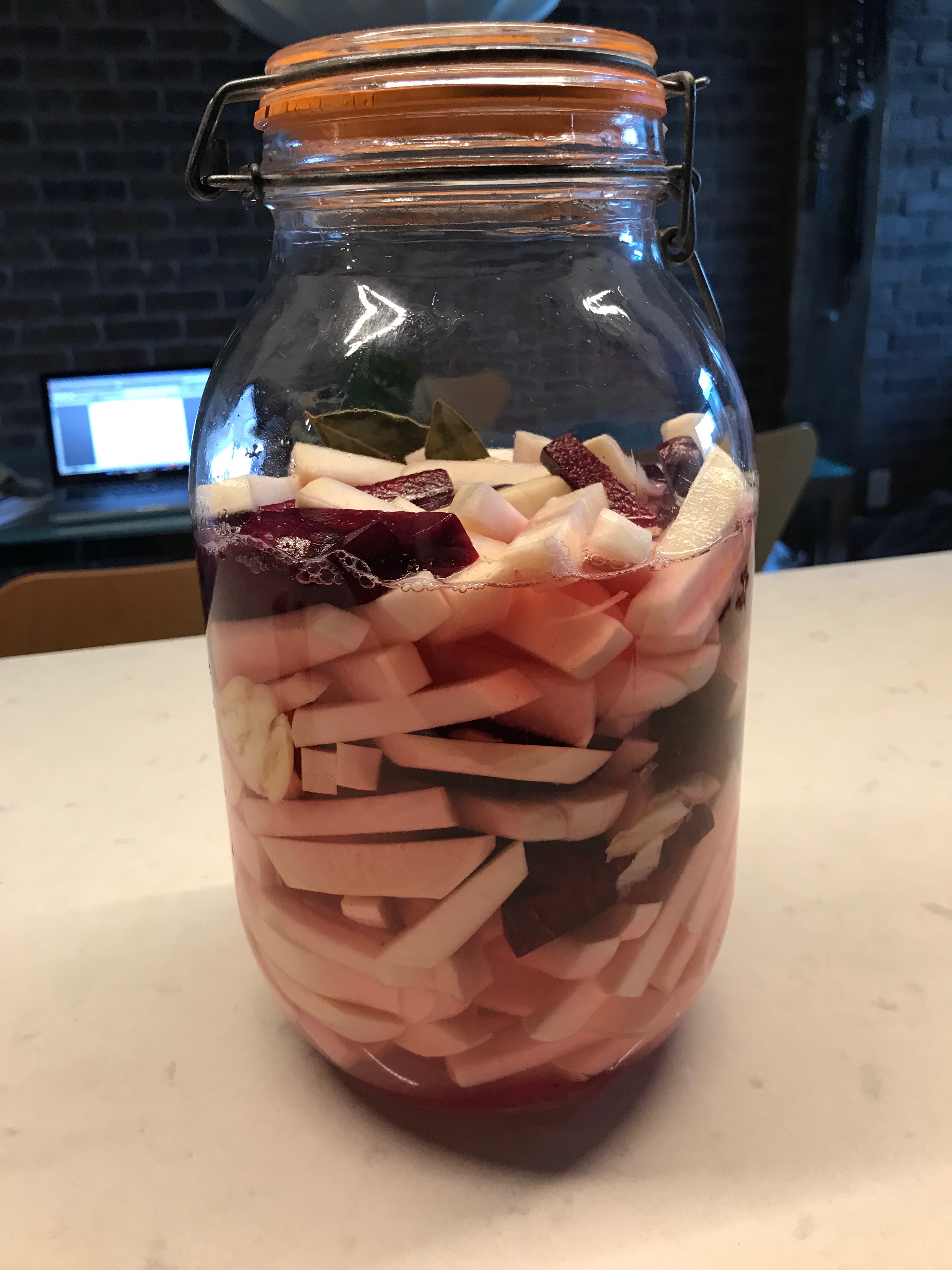
  4. In a sealable jar add all the turnips and beets, along with the cooled water mixture and the vinegar. Add the crushed garlic now as well.
  5. Mix well and let sit for a minimum of three days but for as long as a week. Enjoy!

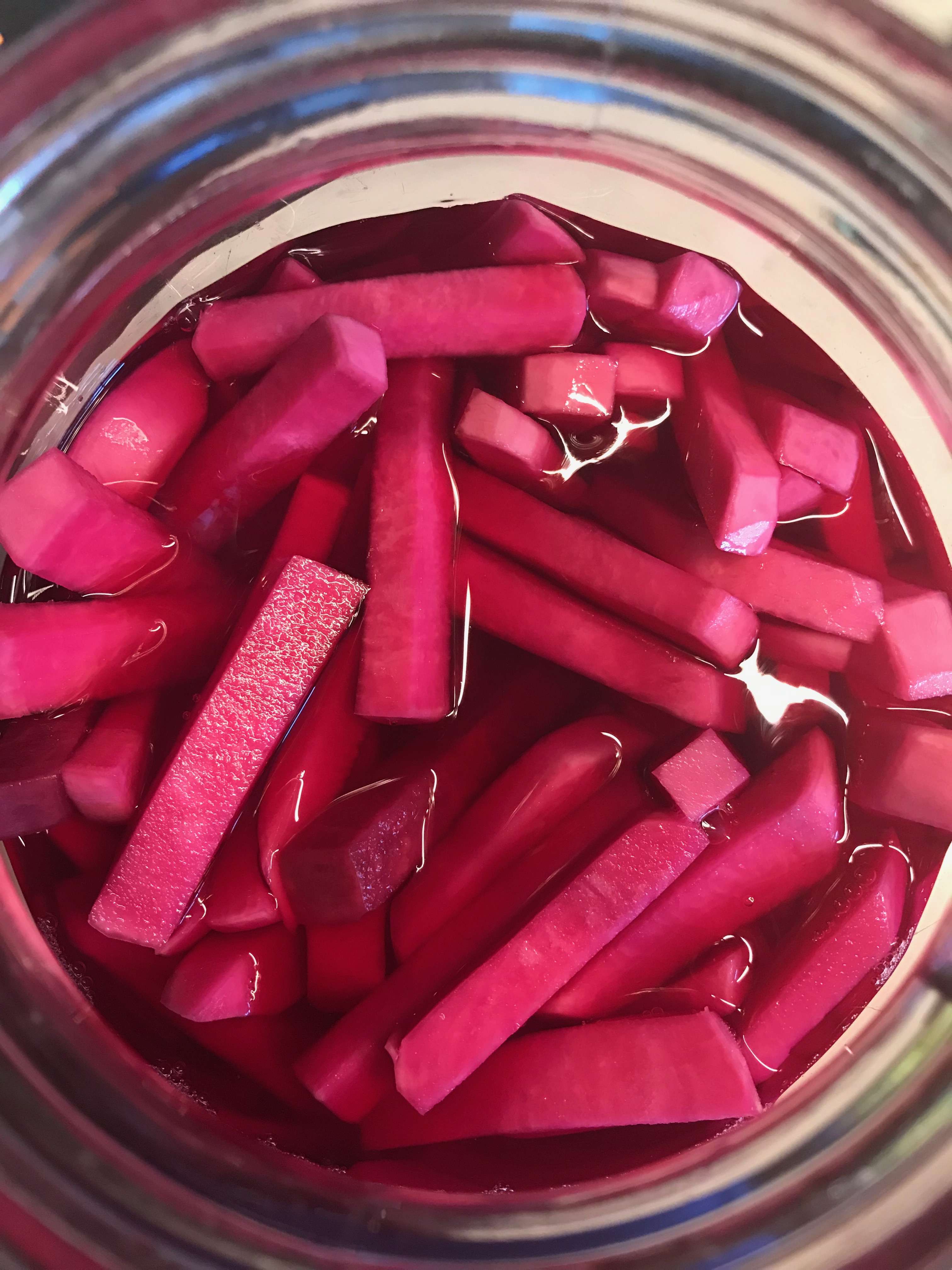
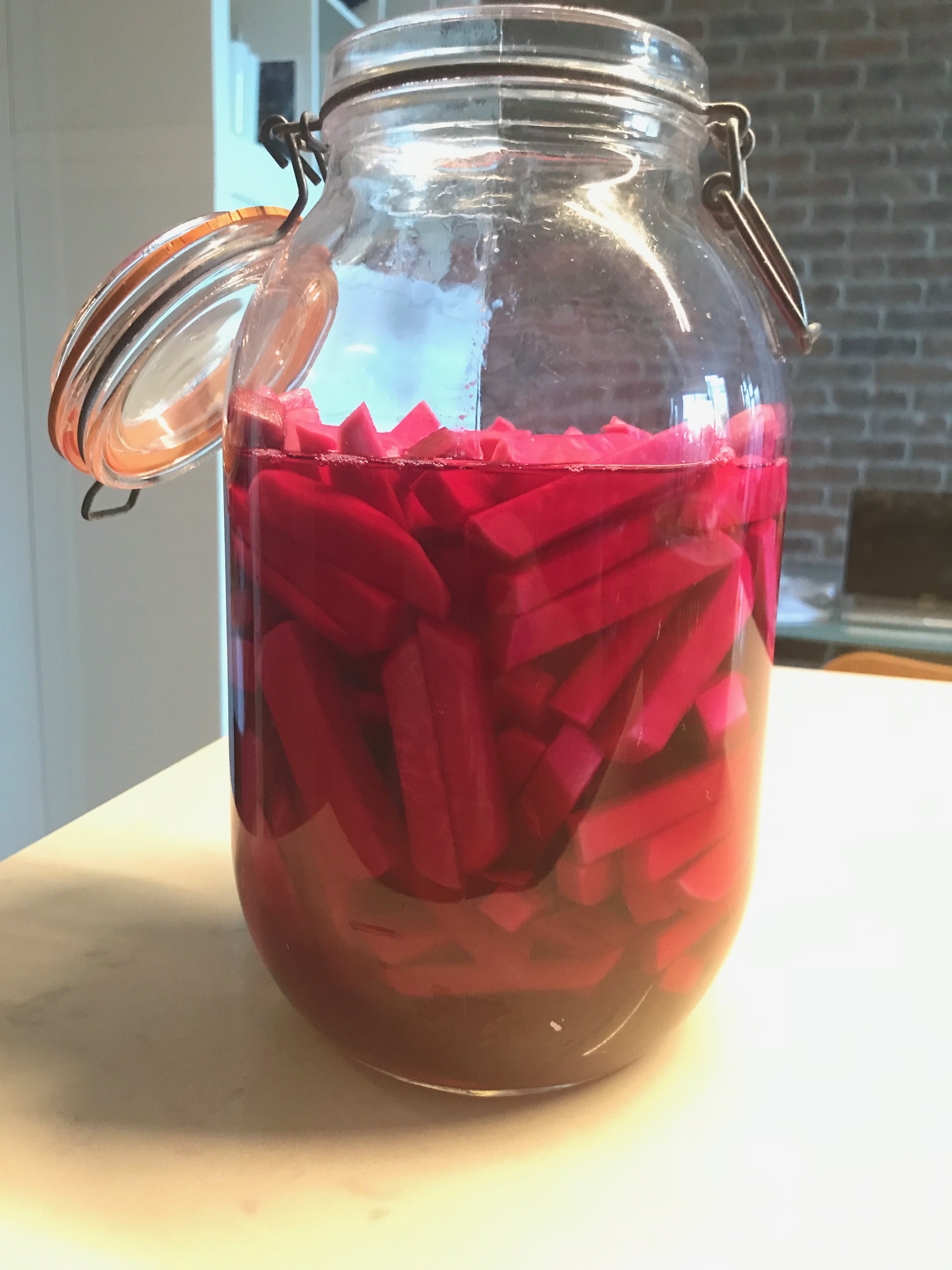
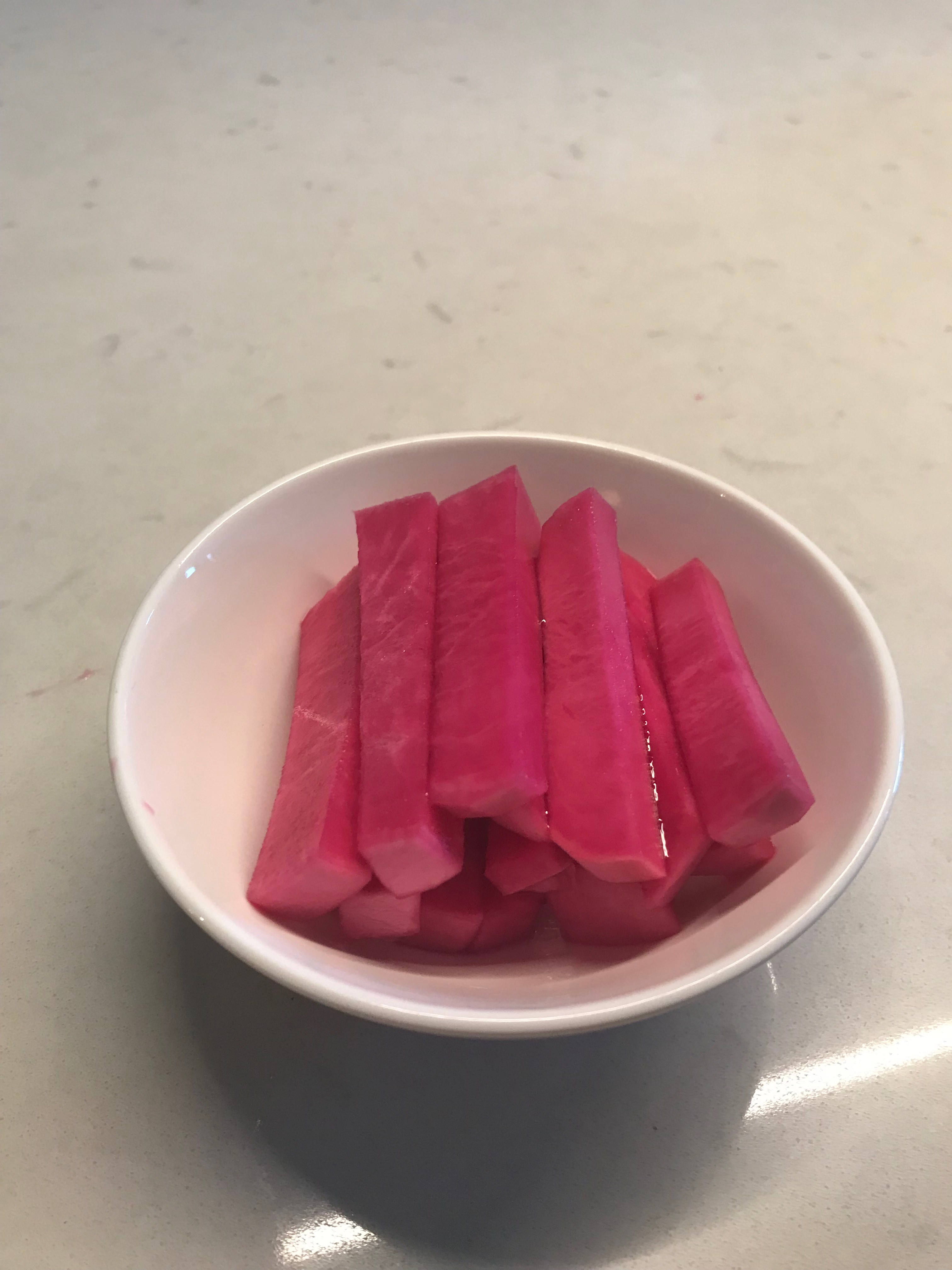
The smell of the turnips is like that of any pickled product, very aromatic. I get the vinegar, garlic and bay leaf very quickly as soon as I open the jar. The pickled turnips feel wet and smooth but still hold there original shape. They are neon pink in colour, this happens from the beets added in the recipe. That actually is the only real use of the beets is for colour in the recipe, they add no additional flavours. The turnips are delicious they are very salty and briny, what you want in a good pickle. They have a little snap to them when you bite down. They turned out perfect. I would go back to this recipe anytime I want to make these in the future. For my taste they were exactly as wanted.

Mango..What?!?!..Mangosteen

As I was strolling idly through the St. Lawerence Market this past week I noticed a strange fruit sitting on the counter of a stall. I stopped, approached and inspected this strange dark ball. The sign read Mangosteen’s and since I’ve never tasted this amazing sounding fruit, all time great fruit name, I decided to buy one to eat. The mangosteen’s taste was sweet and sour on my palate. The taste of the fruit was not overpowering whatsoever. It was not bland but had a touch of sweetness and finished with a slight acidity. Well still in its skin there wasn’t much of any specific smell, but when peeled it did really remind me of a mango with its sweetness. The fruit is small about the size of a plum and when ripe, which it was, is a very deep dark purple colour. When peeled the innards of the fruit are a white almost translucent colour that shimmers with juice. I mean the fruit didn’t really talk much so there wasn’t much to hear. I didn’t want to throw it on the ground to hear a thud in case I may have damaged it. The skin was very tough and almost hard like a rough leather feel. When peeled the meat of the fruit was extremely soft and slimy with a hard pit in the center. The fruit tasted somewhat of mango but was more acidic almost like a small orange. It was hard to make a very close comparison off of one taste. This fruit is very unique as you can’t find it in an everyday grocery store. The store I bought it from is a one off and supplies other unique fruits and vegetables. It is also a regional food sourced mainly from south east Asia.

Image result for mangosteen fruit

By eating this fruit I’m not to sure if I learned much about my palate. Even though it was a unique ingredient to me the flavours were not, they seemed familiar. I really did enjoy eating the fruit the texture was amazing and the flavour was just perfect, it would be amazing as an ice cream flavor. I would eat the fruit again. It is hard to find and that would definitely hinder my ability to eat it again, also it is very expensive which is another reason why I may not eat it again soon.

Eating and trying this food was a little eye opening. I didn’t search out this item I just came across it which was a cool experience it allowed me to think about ways to incorporate this item into dishes. It was fun trying the fruit, it is not often that I try new things because it is easy being comfortable in what you eat, I fall victim to this comfortability. But as a culinary student I need to expand my palate and try new things any chance I get. Doing this will only make me better as a cook.

Matzo Ball Madness

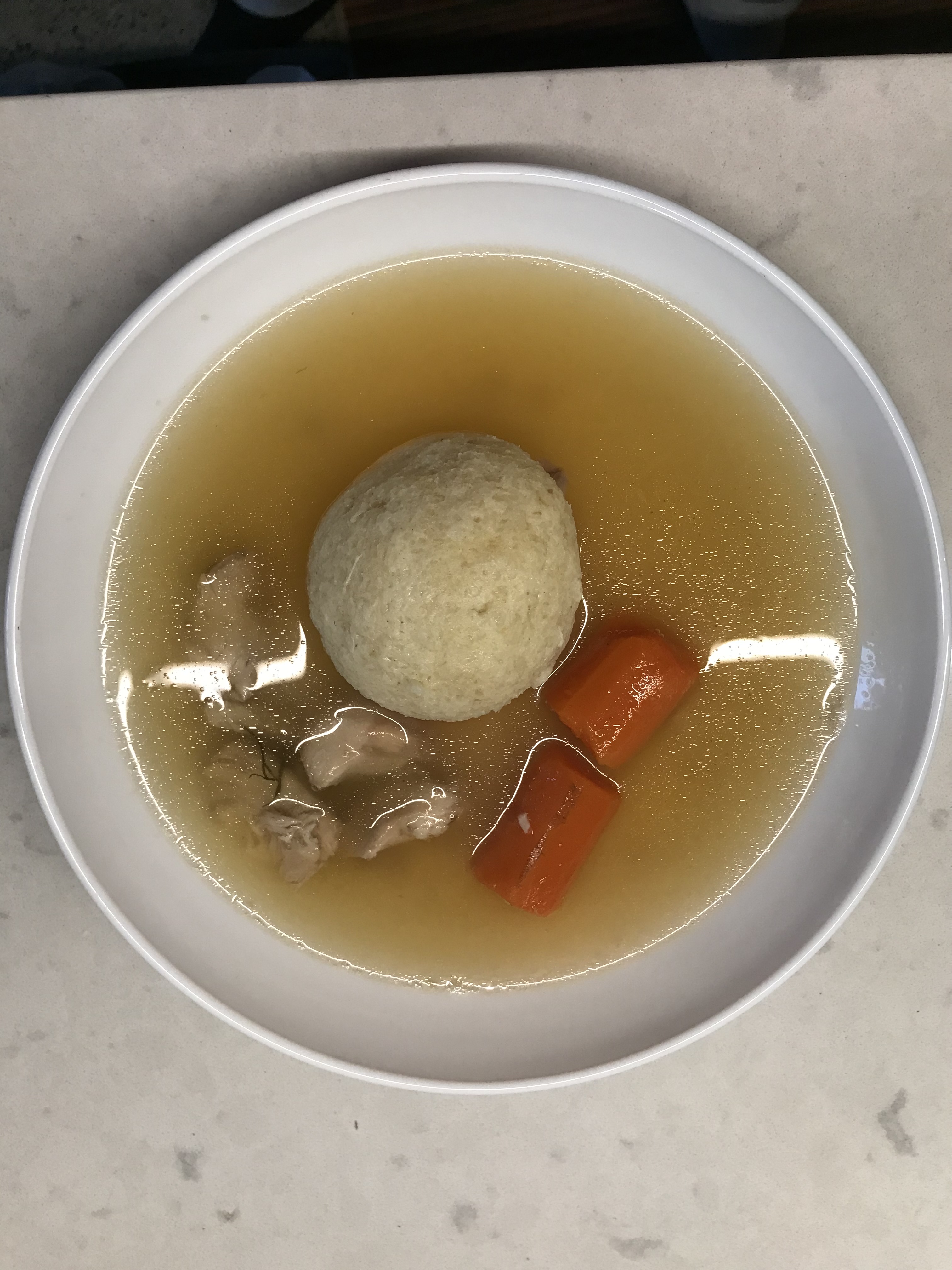
For this blog, I chose to cook matzo ball soup, a classic Jewish comfort food. I chose to make this soup because it is something I grew up eating, but never making. I can remember countless holidays with my family, all of us surrounding the table, as my grandmother, mother and aunt would come and place a steaming bowl of matzo ball soup in front of us. We would be asked, “how many matzo balls do you want?”, and my answer would always be three. Matzah ball soup is more or less a simple chicken soup served with a somewhat unique dumpling like ball made out of matzah meal (unleavened bread served during the holiday of Passover). However, what is significant about this soup are the memories I associate with the soup; sitting at my grandmothers dining room table, with my family, enjoying a steaming of bowl matzah ball soup.

2 kg Chicken Bones
5 Carrots, Medium Dice
5 Celery Stocks, Medium Dice
1 Leek, Medium Dice
2 White Onions, Medium Dice
Fresh bunch of dill
Water to fill stock pot
1 packet Matzo meal
2 eggs
2 Tbsp Olive Oil
(Optional- 1 Clove Garlic, Egg Noodles)

1. Place bones in large stock pot fill stock pot with water until the bones are covered
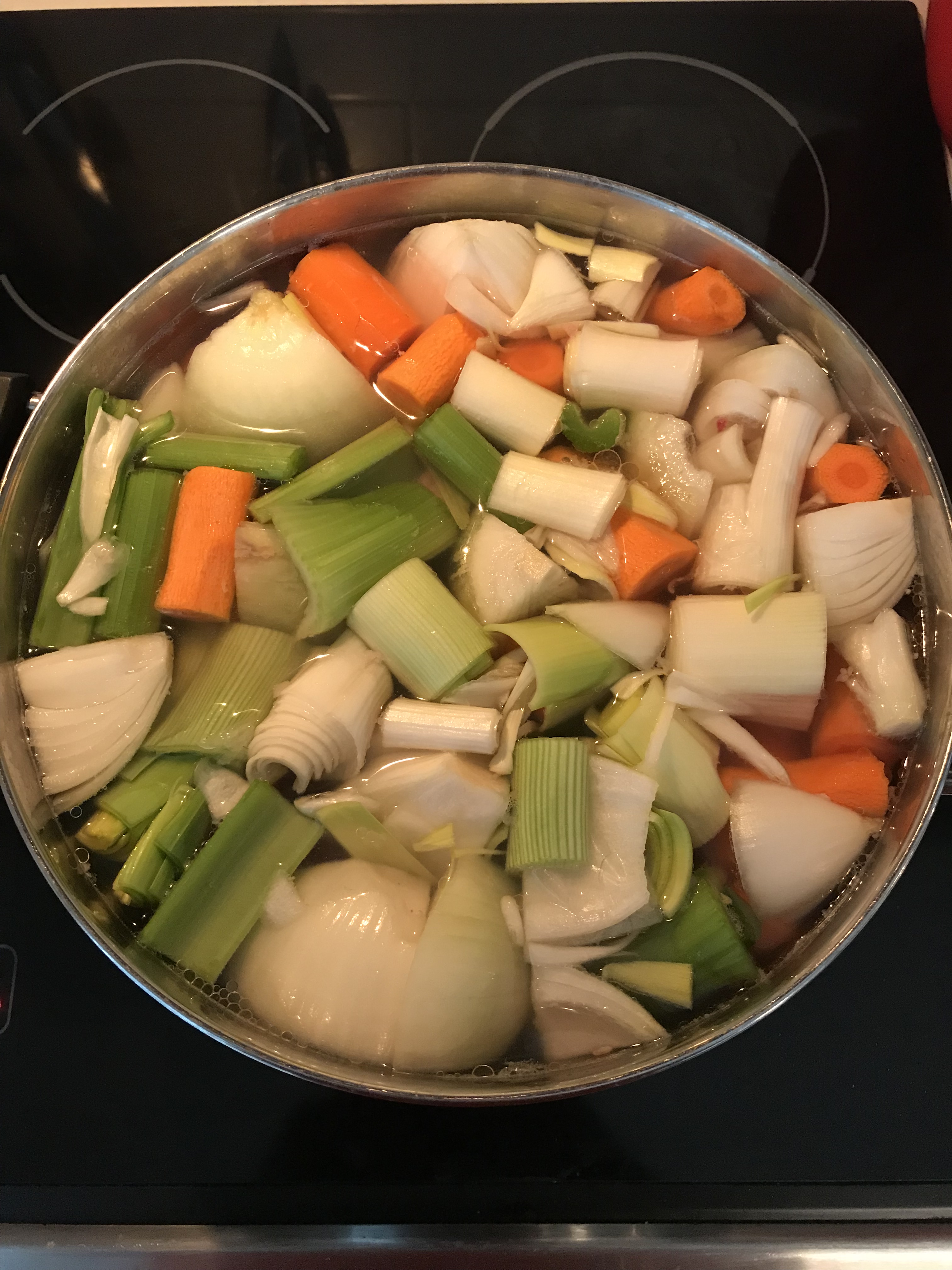
2. Add all the vegetables to the stock pot
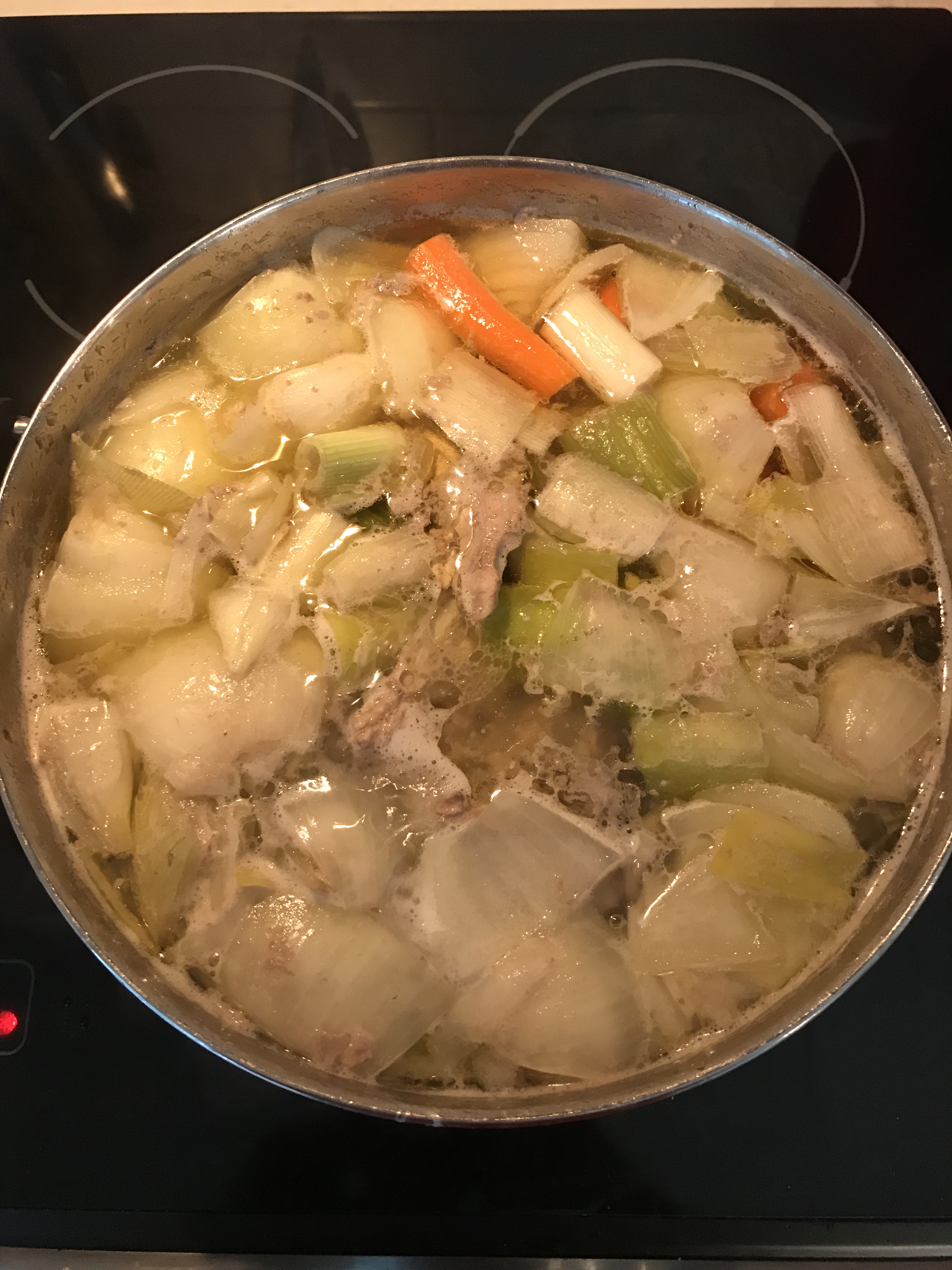
3. Bring to a boil then simmer on medium/low for 3-4 hours
4. Continuously remove boiling fat from the edges of the soup 
5. In a bowl mix the 2 eggs and olive oil, then add the matzo meal mix till incorporated and place in fridge 
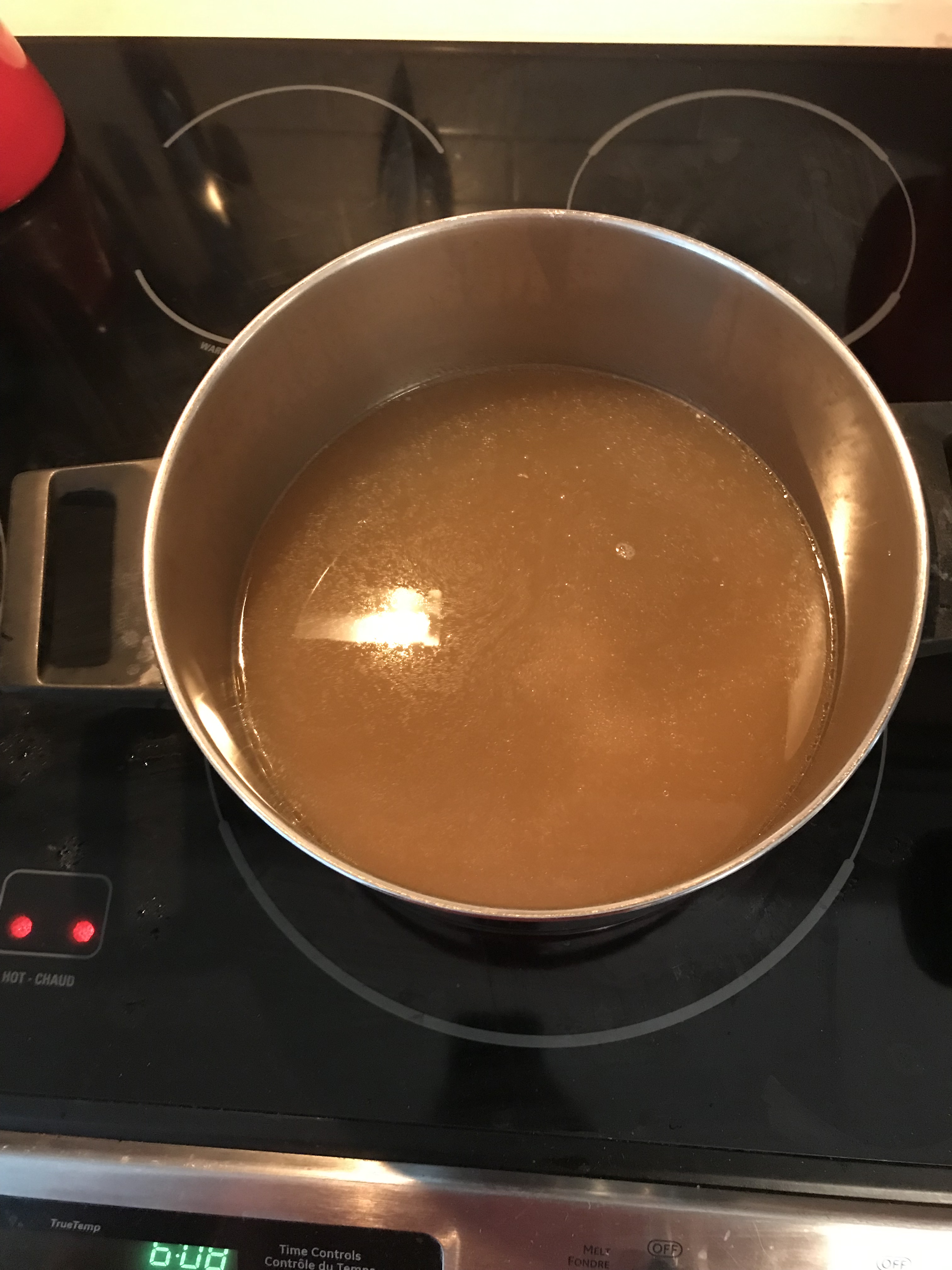
6. Using a cheese cloth strain the stock and set aside
7. Take the carrots and useable chicken from the strained items and set aside.
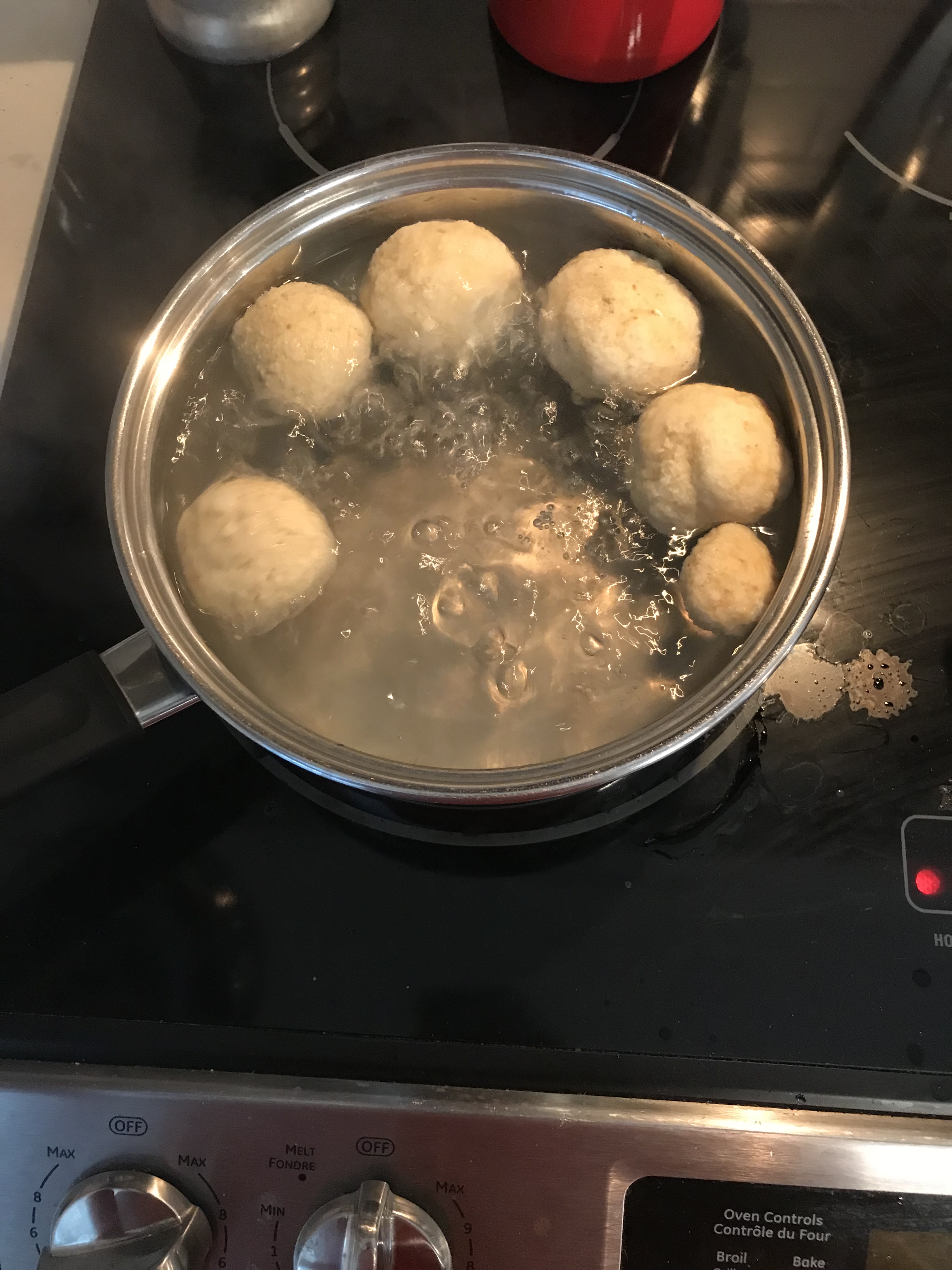
8. Bring a 4l pot of water to boil and add small 2 inch balls of the matzo meal to the water
9. Boil for 20 minutes
10. Serve your reduced stock with pieces of chicken and carrot and as many matzo balls as you please. 

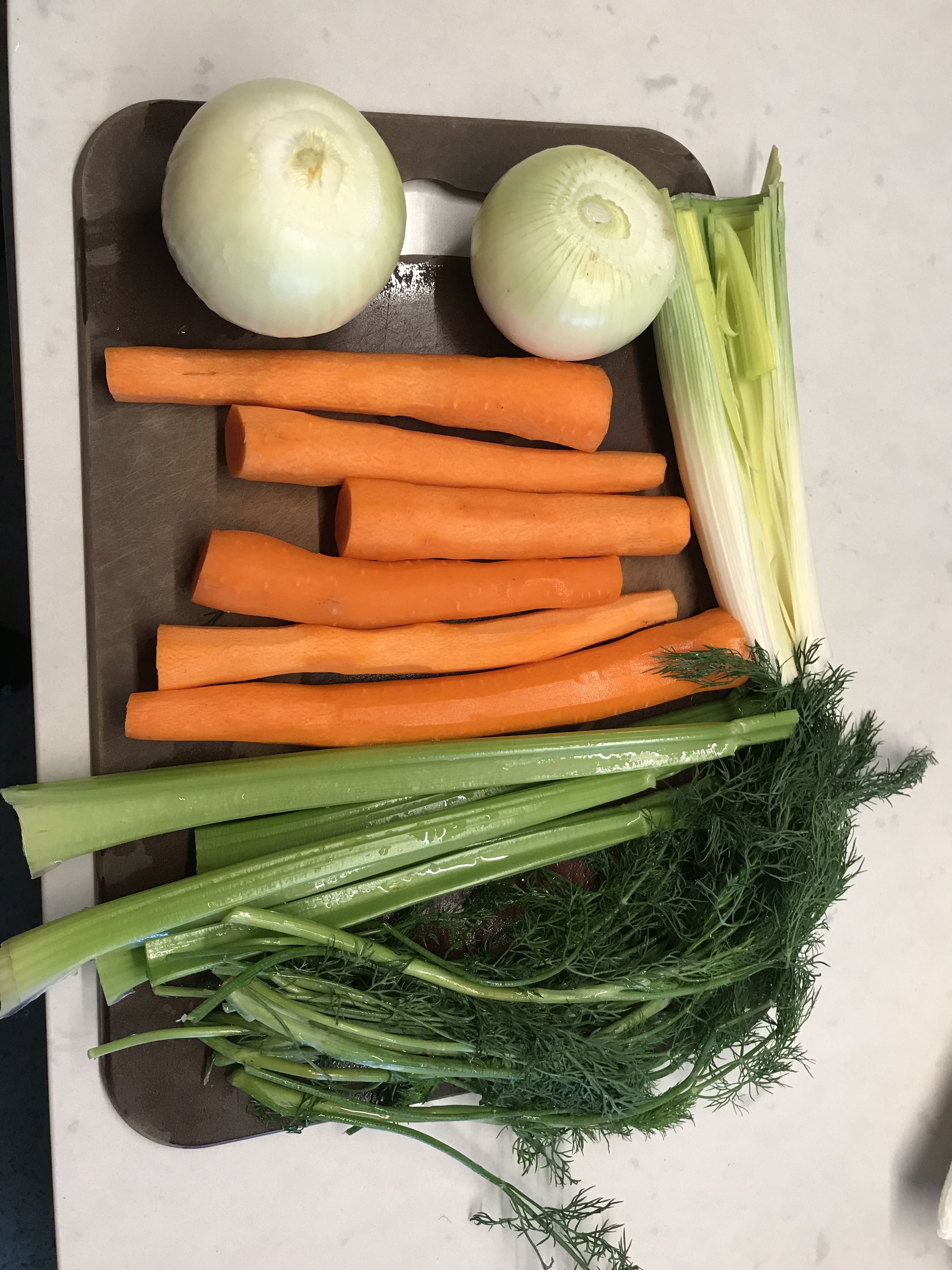
Prepped Veg for soup.
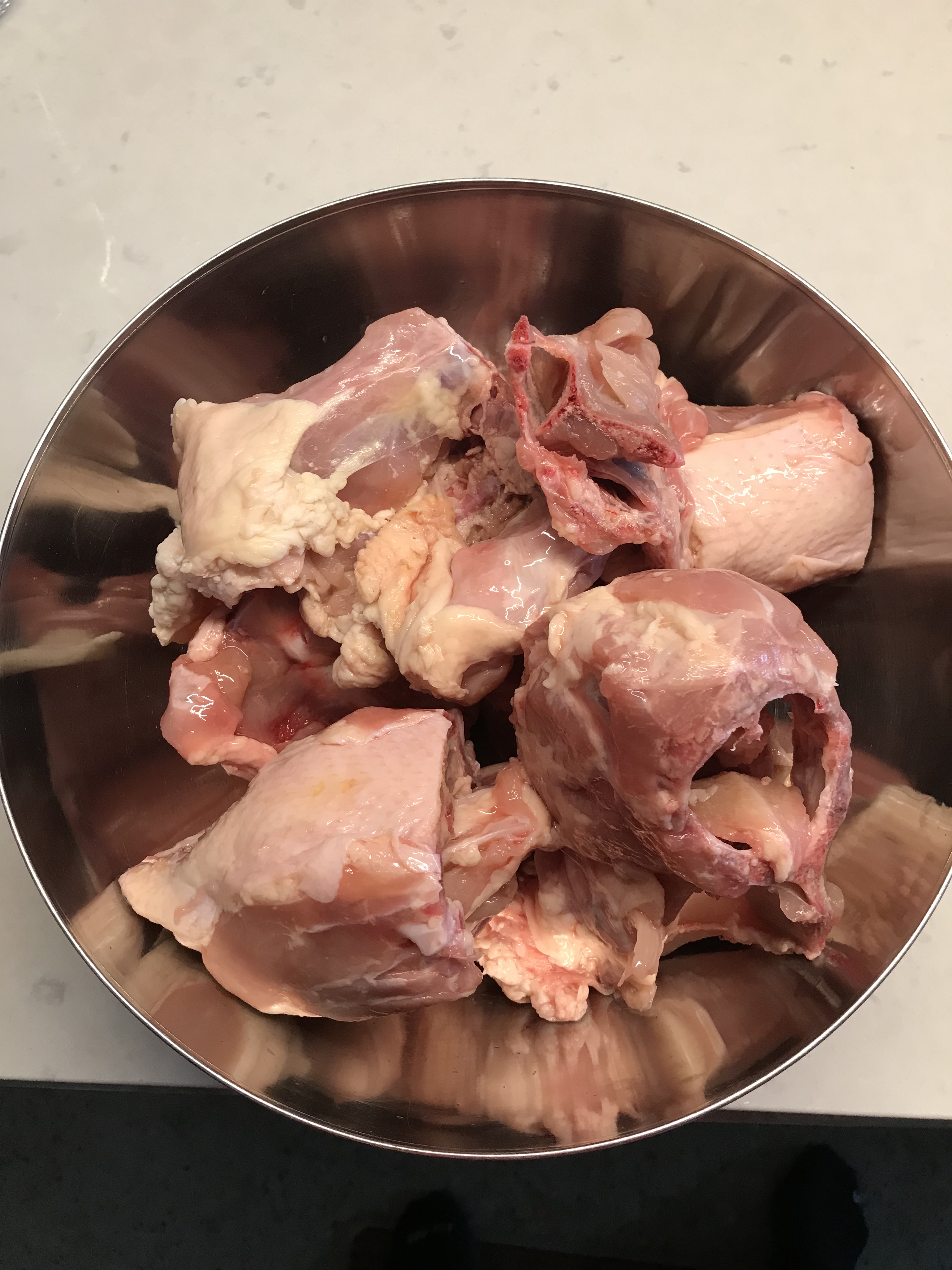
Chicken Bones
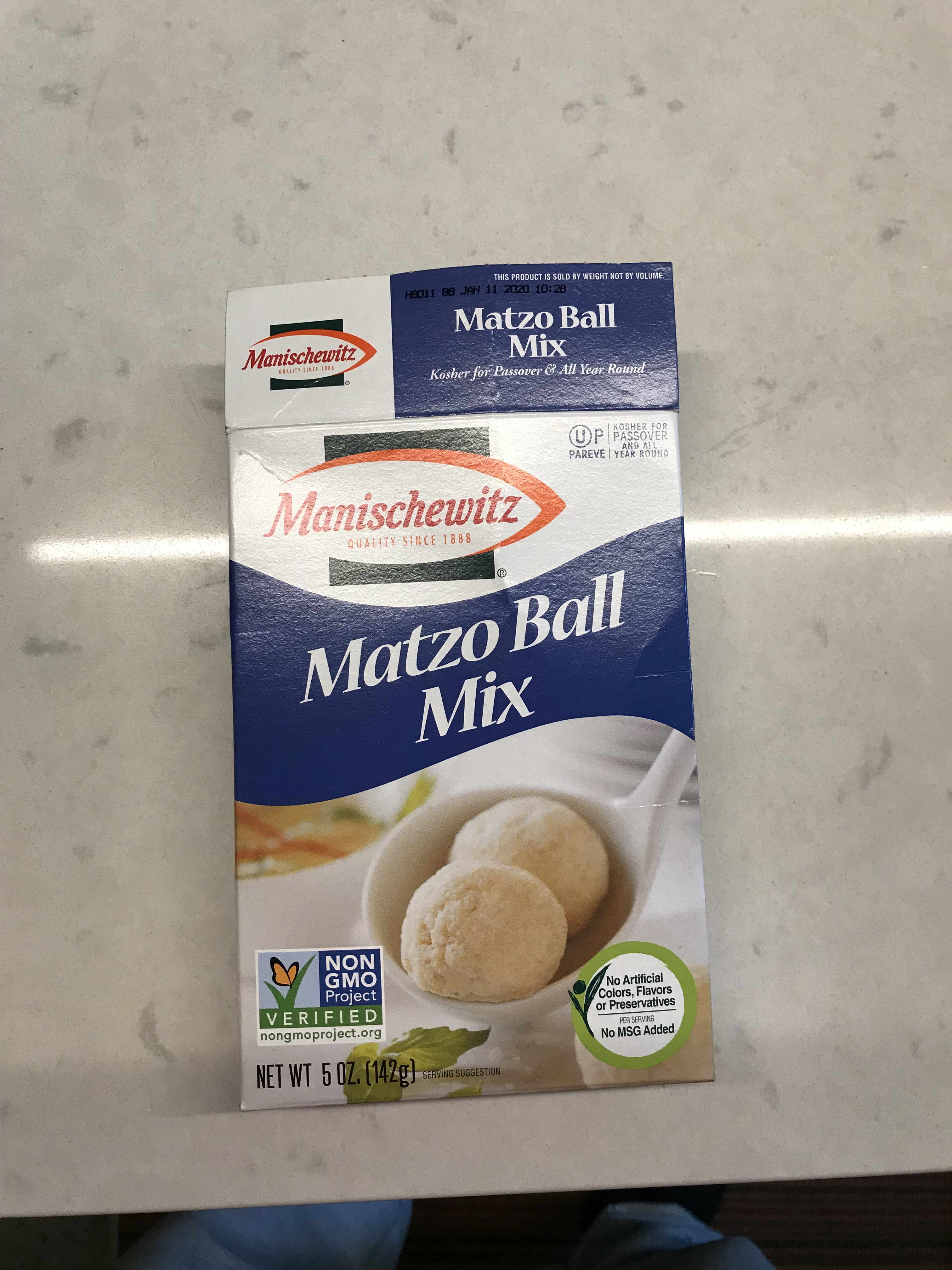
Matzo Meal
Bones and Veg being brought to a boil.
Simmering my soup.
Strained soup.
Cooking my matzo balls
My finished product

As I prepared the soup, I smelled the rich chicken broth cooking. When preparing the matzah balls, I felt the matzo meal in between my fingers as I rolled them into small balls. I heard the boiling of the soup and the water that held my matzo balls. When I tasted the soup, my initial thought was that it does not taste like my grandmothers nor my mothers, which was a disappointment to me; however, I know that they have more experience than I do with making this soup. I saw the progression from how my ingredients started in the pot, to the final product. My broth is the finished product from, essentially, a pot of water.

I poured some matzo ball soup into a bowl and gave it to my mom. She enjoyed the soup, as well as the matzo balls, although it was slightly different as to how she makes the soup. Even though I followed quite closely to her recipe, the final product tasted different from hers. Nonetheless, she enjoyed the soup and had some praise for me. At the end of the day, she is my mother and she never has something negative to say about what I do; it is a blessing and a curse.

A challenge involved in making this soup was trying to recreate something I know so well, but have never attempted making. My expectations were very high for this dish. Because I grew up eating this soup so often, I could argue my blood is filled with chicken broth and clumps of matzo balls. However, I disappointed myself because the broth was not as rich as I would have liked and the flavour was not like my grandmother would make. My matzo balls turned out great, but the soup could have used some more, something, but I am not sure what. Also, what I would do differently the next time I try to create this soup is actually listen to my mom because she always knows best.

Through making this soup, I realized how food can be so intertwined with memories or how a certain food can trigger memories. I can so vividly remember my grandmothers table and the soup being placed in front of me. Now that she is no longer around, it is important for me to remember these things and continue cooking these foods because it was a traditional thing to make for the holidays, but what it really symbolized was the coming together of family and that really made her happy. So I will continue making this soup, as well as her countless other recipes, because it gives true meaning to cooking for me and that meaningfulness is something I hope I can apply to my culinary endeavours.

Blog Post #1 Culinary Biography

Hi my name is Aaron Tissenbaum but I go by Ari. If you were wondering.

This is me. Yay!

I am in this program and am an inspiring chef because I have a real passion for food and cooking. I love to learn and explore new cultures and places and through that the different cuisines that come with those places. I grew up in the kitchen with my mom and grandmother and found my love of food from their cooking. I want to respect my background and cook food that I grew up eating and from parts of the world I call home. I am not currently working in the industry but as a find more of a rhythm with my school work I plan on finding work in a kitchen. My personal philosophy regarding cooking is about fresh home cooked meals that are shared with family and friends. My ideal way to eat is to have a little bite of everything and being able to share it with others. What I hope to gain from these blogs is to see my growth and knowledge regarding food expand and my ability to express this growth become more clear. I hope to take what I learn in class and be able to form my own opinions and make it come across in my future blogs.

“Your body is not a temple, it’s an amusement park. Enjoy the ride.”(Bourdain,2000)

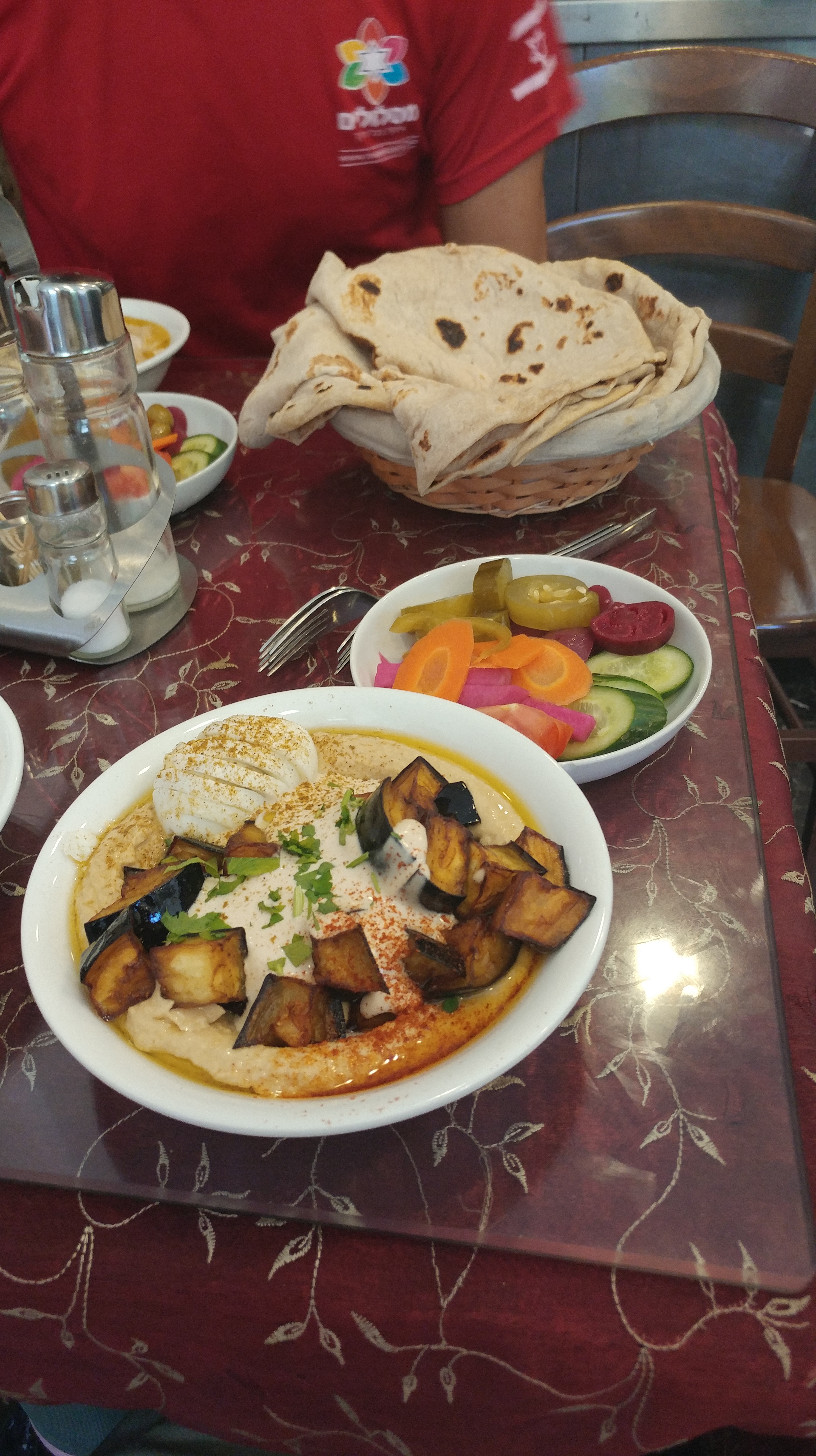
Fresh Hummus in Tzfat

Brad Leone a huge inspiration of mine.

I reference Bon Appetit a lot because I watch their content all the time. I would consider their website a blog they recipes and everything food related. The way I was introduced to them was through their youtube channel and the various hosts they have working for them. Their contributors are all very experienced and personable people and they post excellent content from a wide range of cuisines, styles and techniques. My favourite contributor is Brad Leone who has a serious called its alive, where he focuses on recipes and ingredients that have live active components. Such as yogurt, pickling, kombucha, bread baking and so much more. What draws me to Brad and Bon Appetit is content like that showed by a host like Brad. He’s such a likeable person and highlights such amazing food and you can tell he is so passionate about what he’s talking about. Those kind of people make me sure of what I am doing because I know I can show that same kind of passion for food.

References

Bourdain, A. (2000). Kitchen confidential: adventures in the culinary underbelly. London, UK: Bloomsbury Publishing

Lau, A. (2015). [Headshot]. Retrieved from https://www.bonappetit.com/people/our-team/article/weekly-staffer-brad-leone